
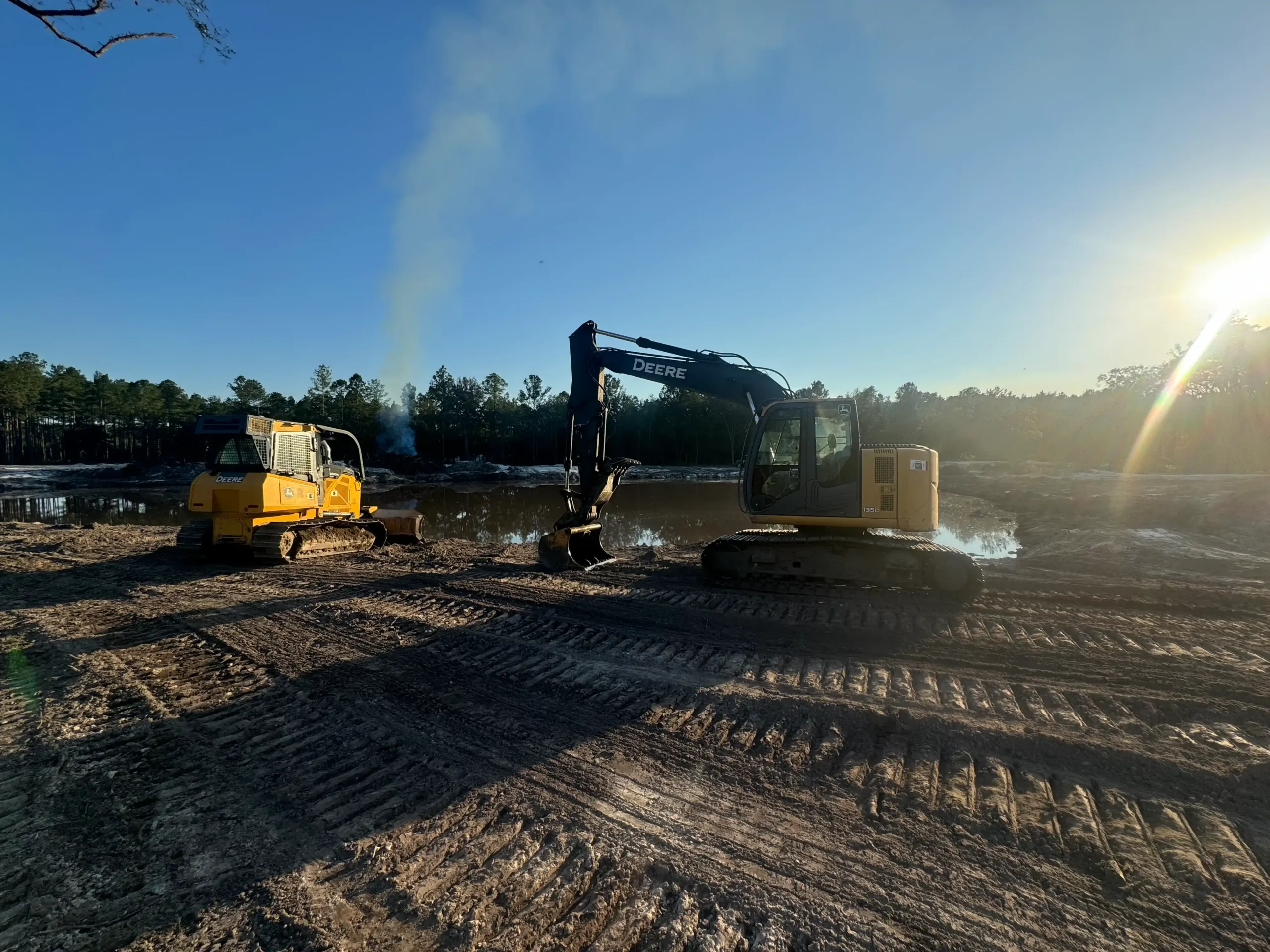
When planning a new home, barn, or shop in Hampton County, South Carolina, land clearing and thoughtful grading shape the outcome more than most owners expect.
Laffitte Landworks LLC helps property owners start smart by turning raw acreage into a build-ready site with the access, drainage, and stability that long-term performance demands. Here’s more information about how the process works.
Start With the Real Goal: Predictable Soil and Water Control
A durable structure needs two things before a crew pours concrete:
- Soil that carries loads consistently
- A site that moves water away from the building area
When you invest in land clearing for strong foundations, you remove the organic material that rots, compresses, and creates voids. When you plan site preparation before building, you set elevations and slopes that reduce ponding, soft spots, and erosion after heavy rainfall in the Lowcountry.
See What Professional Land Clearing Actually Removes
Owners often picture clearing as “make it look clean,” but land clearing for construction targets what interferes with a stable pad and safe access.
An experienced crew removes trees, brush, vines, and debris, then addresses stumps and root mats where the building, driveway, and utility corridors will run. Many local sites benefit from forestry mulching across broader areas because it reduces haul-off and helps protect exposed soil, while targeted grubbing in structural zones prevents future settlement.
Follow a Step-by-Step Site Prep Sequence That Protects Your Pad
The best results come from a logical workflow. Trusted professionals begin with layout and constraints, then install erosion controls early so storms do not wash progress downhill.
Next, they strip and stockpile topsoil, as it supports landscaping but does not serve as a structural layer. After that, crews rough grade to create the larger layout of the site, accounting for pad elevation, drainage paths, and access routes.
Build the Pad Like a Contractor, Not Like a Bulldozer Operator
A strong pad does not come from simply “making it flat.” Local experts proof-roll the area to find weak spots, then undercut unsuitable soil and replace it with stable material. They place fill in thin lifts, condition moisture, and compact each layer so the base resists movement.
This discipline supports foundations, slabs, and drive lanes, especially when a site holds water seasonally or includes variable sandy and clay soils common in the region.
Protect Your Property With Drainage and Stabilization Details
In Hampton County, land clearing and sitework must account for intense storms. When you plan utilities, insist on stable trench backfill and compaction to prevent settlement that cracks slabs or misaligns drives.
Reliable crews shape positive drainage away from structures, cut swales where needed, and prepare stable drive access so heavy trucks do not rut the pad edges. They also quickly stabilize exposed soil with seed, straw, mulch, or erosion matting, helping the site hold grade during rain events.
These steps reduce rework, protect neighboring properties, and keep projects on schedule.
Account for Permits, Utilities, and Environmental Rules
Even a small build can trigger erosion and stormwater requirements, so ask your contractor who handles paperwork and maintains best management practices after each rain.
Start with a survey, then flag easements, wetlands, and setback lines before machines arrive. Next, the crew calls 811, marks utilities, and builds a stabilized entrance to prevent trucks from rutting the roadway and tracking sediment. During grading, contractors should protect ditches and low areas with silt fences or other controls, then quickly stabilize bare soil.
These steps protect schedules and keep waterways cleaner overall. If you plan a pad near a wet spot, request a drainage sketch showing runoff paths before and after final grading for clarity.
Evaluate Contractors by Scope Clarity, Not Just Price
When you compare large acreage property land clearing services and construction site clearing services, insist on a proposal that describes methods and limits in plain language. Ask bidders to explain:
- What stays and what goes, including stump handling in building and drive areas
- How they address wet ground, soft spots, and compaction on the building pad
- Where water will flow during construction and after final grading
Clear answers signal experience, protect your budget, and reduce the risk of foundation movement later.
Plan for Long-Term Performance After the Equipment Leaves
Good sitework supports the next phases of construction. Once the crew finishes, you should see a defined building envelope, stable access, and drainage that makes sense from multiple viewpoints. Fill, compaction, and erosion controls should support the project through the next storm cycle, not just the next inspection.
Contact Laffitte Landworks LLC To Take the Next Step With a Build-Ready Plan
If you want a durable project outcome in Hampton County or the surrounding region, start with a walkthrough that matches clearing and grading to your structure, soils, and drainage goals.
For expert land clearing and site preparation before building, call Laffitte Landworks LLC at (803) 346-4869 or contact us online for a free quote.
