
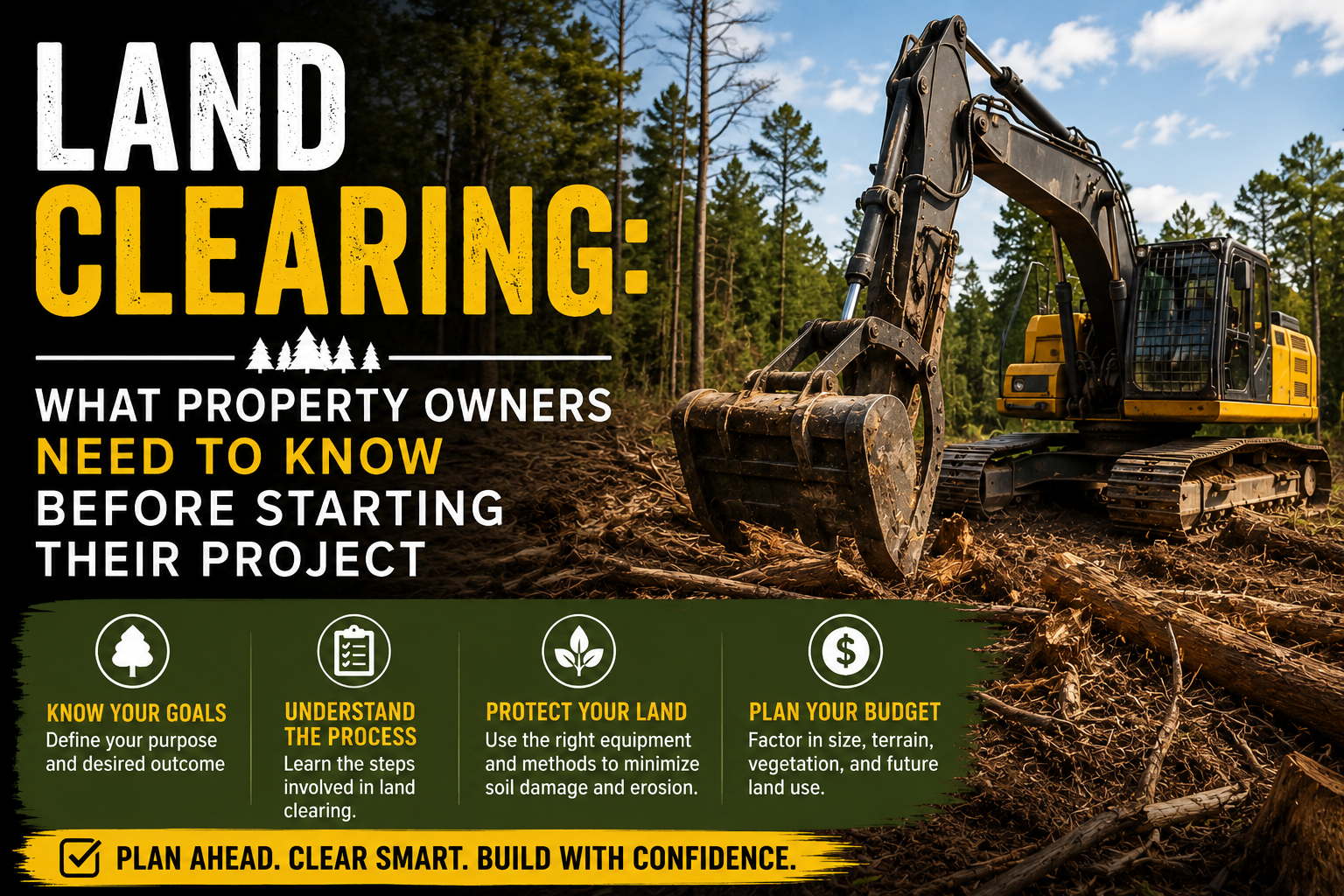
So you’ve got a piece of land that’s seen better days. Maybe it’s overgrown with vegetation, cluttered with fallen trees, or just hasn’t been touched in decades. Whether you’re a farm owner looking to put more acreage into production or a property owner ready to finally build that dream home, land clearing is likely on your radar.
But before you fire up a chainsaw or call in heavy equipment, there’s quite a bit you should understand about this process. Getting it right from the start saves you money, protects your property’s value, and keeps you on the right side of local regulations.
Let’s walk through everything you need to know.
Understanding Your Land Clearing Options
Not all land clearing methods are created equal. The approach that works best for your property depends on several factors: the terrain, what’s growing there, your timeline, and what you plan to do with the land afterward.
Traditional Land Clearing and Excavation
Traditional clearing typically involves using excavators, bulldozers, and other heavy machinery to remove trees, stumps, and vegetation. This method works well when you need to reshape the terrain significantly or when excavation is part of your overall plan.
For properties in Hampton County and surrounding areas, excavation-based clearing makes sense when you’re preparing for construction, installing drainage systems, or need to move substantial amounts of soil. The sandy loam and clay soils common throughout this region can present challenges during wet seasons, so timing matters.
Forestry Mulching: A Modern Approach
Forestry mulching has become increasingly popular among property owners, and for good reason. This single-machine method cuts, grinds, and spreads vegetation in one pass. Instead of hauling away debris or burning brush piles, the organic material stays on your land as mulch.
This approach works particularly well in South Carolina’s climate. The mulch layer helps retain soil moisture during our hot summers, reduces erosion on sloped properties, and returns nutrients to the ground as it decomposes. If you’re dealing with dense stands of Liquidambar styraciflua (sweetgum), Pinus taeda (loblolly pine), or invasive species like Ligustrum sinense (Chinese privet), forestry mulching handles them efficiently.
What to Consider Before Your Project Begins
Assess Your Property’s Current Condition
Walk your land before any work begins. Note the types of vegetation present, identify any areas with standing water or drainage issues, and look for features you want to preserve. That mature Quercus virginiana (live oak) near your property line? Probably worth keeping. The tangled mess of Smilax rotundifolia (common greenbrier) choking out everything else? That can go.
Understanding your soil conditions matters too. Properties around Estill, SC often have varying soil compositions even within a single parcel. Sandy areas drain quickly but may need organic matter added back. Clay-heavy sections hold moisture longer and may require different site preparation approaches.
Define Your End Goals
What happens after clearing makes a huge difference in how the work should be done. Are you:
- Preparing pastureland for livestock?
- Creating food plots for wildlife management?
- Getting ready for residential or agricultural construction?
- Improving access for timber management?
- Restoring overgrown farmland to production?
Farm owners converting wooded acreage to pasture have different needs than someone clearing a homesite. The depth of clearing, whether stumps stay or go, and how the site is finished all depend on your plans.
Budget Realistically
Land clearing costs vary significantly based on vegetation density, terrain difficulty, and the method used. Heavily wooded properties with large Quercus nigra (water oak) and dense understory will cost more than clearing scrubby regrowth on old farmland.
Get multiple quotes, but be wary of prices that seem too good. Cheap work often means cutting corners—literally and figuratively. Incomplete stump removal, inadequate debris management, and soil compaction from improper equipment use can create expensive problems down the road.
The Land Management Perspective
Smart property owners think beyond the immediate project. Land clearing isn’t just about removing what’s there now—it’s about setting up your property for long-term success.
Soil Health Matters
Whatever clearing method you choose affects your soil’s health. Heavy equipment can compact soil, reducing its ability to absorb water and support plant growth. Forestry mulching, by contrast, often improves soil conditions over time as the organic material breaks down.
In our region’s climate, maintaining good soil structure helps properties weather both summer droughts and heavy rains. Compacted soil leads to runoff, erosion, and poor growing conditions whether you’re establishing pasture grass or landscaping around a new home.
Erosion Control Planning
South Carolina receives significant rainfall, and freshly cleared land is vulnerable to erosion. Your land clearing contractor should understand how to minimize this risk and may recommend specific site preparation steps after clearing.
Slopes require particular attention. Properties in Hampton County often feature subtle grade changes that can channel water in unexpected ways once vegetation is removed. Planning for this before clearing begins prevents problems.
Timing Your Project
The best time for land clearing in our area is typically late fall through early spring. The ground is firmer (usually), vegetation is dormant, and there’s time for the site to stabilize before heavy summer rains arrive.
That said, good contractors can work year-round with proper precautions. Just understand that wet-season work may take longer and require additional erosion control measures.
Working with Professionals
You might be tempted to handle land clearing yourself, especially for smaller properties. While that’s possible for minor brush clearing, larger projects benefit from professional equipment and expertise.
Professional forestry mulching equipment processes vegetation far faster than any approach available to typical property owners. Commercial mulchers handle trees up to 8-12 inches in diameter without breaking stride. Trying to achieve similar results with a chainsaw, brush cutter, and rental chipper takes exponentially longer and leaves you with debris to manage.
More importantly, professionals understand the nuances of site preparation. They know how to work around utilities, respect property boundaries, protect trees you want to keep, and leave the site ready for whatever comes next.
Frequently Asked Questions
Do I need a permit for forestry mulching on my own property?
The answer depends on several factors, including your property’s location, size, and any environmental features present. In most cases, routine forestry mulching for property maintenance or agricultural purposes on your own land doesn’t require a permit in South Carolina. However, if your property contains wetlands, is located in a flood zone, or if you’re clearing near waterways, different rules may apply.
Properties under timber management plans or those enrolled in agricultural programs may have specific requirements as well. When in doubt, check with Hampton County’s planning and zoning office before starting work. It’s much easier to get clarity upfront than to deal with violations after the fact.
Ready to Get Started?
Land clearing transforms overgrown, underutilized property into something functional and valuable. Whether you’re a farm owner bringing old fields back into production, a property owner preparing to build, or simply tired of looking at that mess in the back forty, the right approach makes all the difference.
Here at Laffitte Landworks, we help property owners throughout Estill, SC, Hampton County, and the surrounding areas tackle land clearing projects of all sizes. From selective forestry mulching to comprehensive site preparation involving excavation and grading, we match the method to your property’s needs and your goals.
Give us a call or reach out through our website at laffitelandworks.com to discuss your project. We’re happy to walk your property, talk through options, and provide a straightforward quote. Your land has potential—let’s uncover it together.
