
There’s something deeply satisfying about looking out over your property and actually seeing it—not just a tangle of overgrown brush, invasive species, and fallen timber that’s been piling up for years. If you’ve been putting off dealing with that mess on your land, forestry mulching might be exactly what you need.
At Laffitte Landworks, we’ve helped countless property owners transform unusable, overgrown acreage into productive, accessible land. Whether you’re a farm owner looking to reclaim pasture, a property owner preparing for construction, or someone who simply wants to enjoy their land again, this guide will walk you through everything you need to know about forestry mulching.
What Is Forestry Mulching, Anyway?
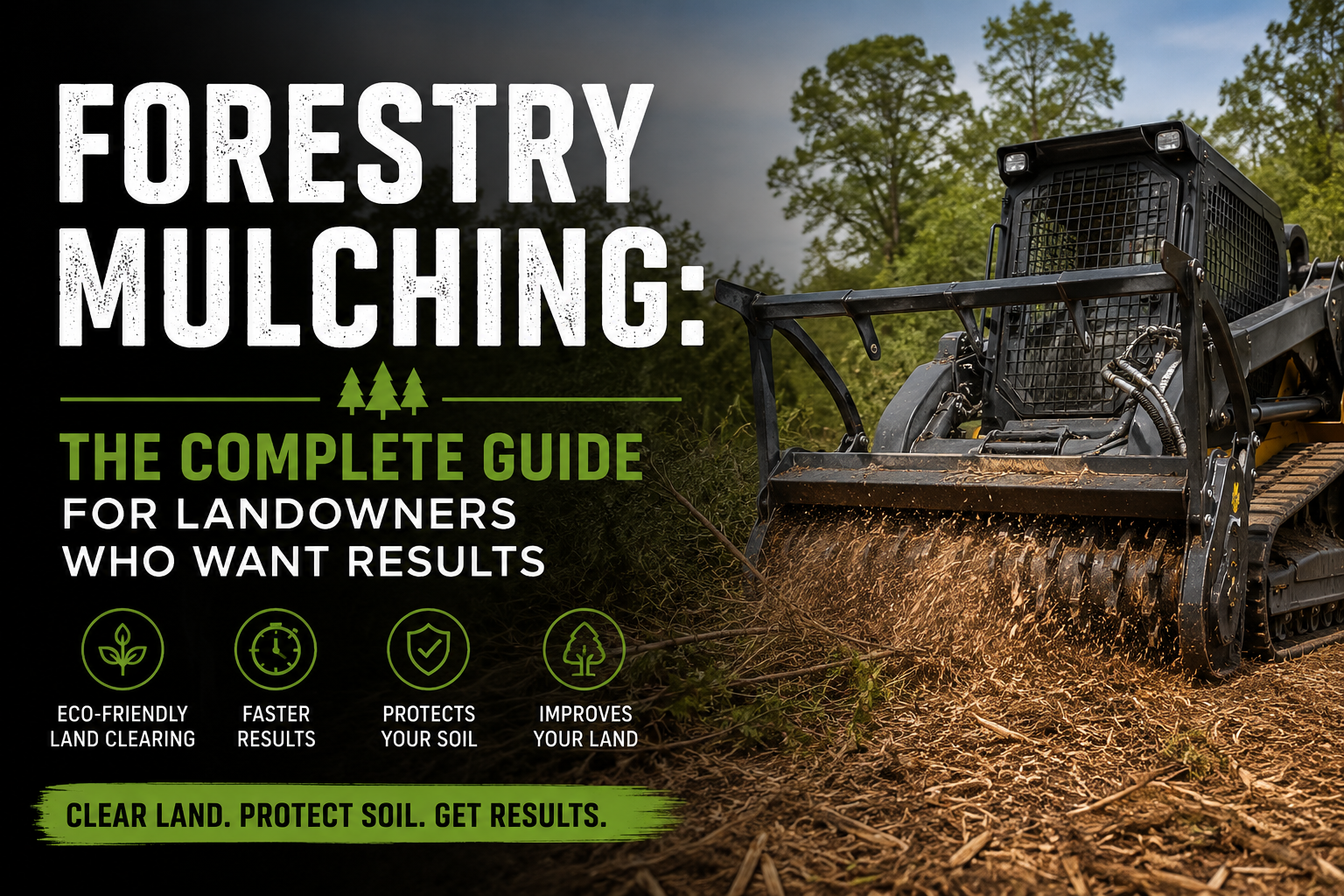
Forestry mulching is a land clearing method that uses specialized equipment to cut, grind, and spread vegetation in a single pass. Unlike traditional clearing methods that involve chainsaws, bulldozers, burn piles, and hauling debris off-site, a forestry mulcher handles everything on the spot.
The machine uses a rotating drum equipped with steel teeth or carbide cutters to shred trees, brush, and stumps into small wood chips. These chips are then spread across the ground as a natural mulch layer. No burning. No hauling. No massive piles of debris sitting on your property for weeks.
How It Actually Works
Picture a piece of heavy equipment—typically a skid steer or dedicated mulching tractor—fitted with a powerful grinding head. The operator drives into the vegetation, and the mulcher does its thing. Small trees (usually up to 6-8 inches in diameter, sometimes larger depending on the equipment) get processed along with underbrush, vines, and woody debris.
What’s left behind is a layer of organic mulch that breaks down over time, returning nutrients to the soil. The ground stays relatively undisturbed, which is a huge advantage we’ll get into shortly.
Why Property Owners Are Choosing Forestry Mulching Over Traditional Methods
If you’ve ever cleared land the old-fashioned way, you know it’s a nightmare. Chainsaws, brush piles, waiting for burn permits, hiring someone to haul everything away—it takes forever and costs a fortune.
Better for Your Soil
Here in Hampton County and the surrounding areas, including communities like Estill, SC, the soil conditions can vary quite a bit. Sandy loam in some spots, heavier clay in others. Traditional land clearing with bulldozers and root rakes tears up that topsoil something fierce. You end up with erosion problems, ruts, and compaction that can take years to recover.
Forestry mulching keeps the root systems in place and leaves that protective mulch layer on top. This helps prevent erosion, retains moisture, and actually improves soil health over time as the organic material decomposes.
Faster and More Cost-Effective
Most forestry mulching projects can be completed in a fraction of the time compared to traditional clearing. No separate crews for cutting, piling, burning, and cleanup. One machine, one operator, one pass. That efficiency translates directly into cost savings for you.
Environmentally Friendly
No burn piles means no smoke, no fire risk, and no permits to worry about (more on permits in the FAQ below). The mulch layer also provides habitat for beneficial insects and organisms while suppressing weed growth.
Common Uses for Forestry Mulching
Land Clearing for Development
Whether you’re building a home, installing a driveway, or preparing a commercial site, forestry mulching creates a clean slate without destroying your topsoil. It’s often the first step before excavation work begins.
Pasture Reclamation for Farm Owners
Got fence lines disappearing under brush? Pastures shrinking every year as the tree line creeps in? Farm owners use forestry mulching to reclaim productive acreage and maintain property boundaries. It’s particularly popular for cattle operations where every acre of grazing land matters.
Trail and Road Creation
Need access roads through wooded areas? Hiking or riding trails? Forestry mulching creates clean, navigable paths while leaving the surrounding vegetation intact.
Fire Prevention and Land Management
Overgrown properties with dense underbrush are fire hazards waiting to happen. Regular forestry mulching as part of an ongoing land management plan reduces fuel loads and creates firebreaks.
Invasive Species Control
Privet, kudzu, and other invasive plants can take over quickly in our region. Mulching them down—especially before they go to seed—is an effective control method when combined with follow-up treatments.
What to Expect During Your Forestry Mulching Project
The Initial Assessment
Before any equipment rolls onto your property, a good contractor will walk the site with you. At Laffitte Landworks, we want to understand exactly what you’re trying to accomplish. Clear the whole thing? Leave certain trees? Create specific access points? This is also when we identify any obstacles—buried utilities, old fencing, large rocks—that might affect the work.
The Actual Work
Depending on the density of vegetation and the size of the area, forestry mulching typically proceeds at anywhere from half an acre to two acres per day. You’ll see (and hear) the mulcher working methodically through the designated area. It’s not quiet work, but it’s efficient.
After the Mulching
Once complete, you’re left with a cleared area covered in wood chips and mulch. Some property owners leave it as-is, especially if they’re planning to let it naturalize or if erosion control is a priority. Others follow up with additional excavation work for grading, pond building, or foundation preparation.
Forestry Mulching vs. Other Land Clearing Methods
| Method | Pros | Cons |
|---|---|---|
| Forestry Mulching | Fast, preserves topsoil, no debris removal needed | Limited to smaller diameter trees |
| Bulldozing | Handles any size vegetation | Destroys topsoil, creates erosion, requires debris removal |
| Hand Clearing | Precise control, minimal equipment | Extremely slow, labor-intensive, expensive |
| Controlled Burning | Inexpensive | Permit required, weather-dependent, fire risk, smoke |
Frequently Asked Questions
Do I Need a Permit for Forestry Mulching on My Own Property?
In most cases, no—you don’t need a permit for forestry mulching on your own property. Unlike burning, which requires permits in South Carolina, mulching is considered a mechanical clearing method and typically doesn’t trigger permit requirements.
However, there are exceptions. If your property is in a wetland area, near waterways, or subject to specific zoning restrictions, you may need approval. Properties with conservation easements or those in certain planned developments might have additional rules. If you’re clearing land for commercial development, the site plan approval process may include vegetation removal in its scope.
When in doubt, a quick call to your county planning office can confirm whether any permits apply to your specific situation. For most residential and agricultural landowners in Hampton County and surrounding areas, you’re good to go.
How Much Does Forestry Mulching Cost?
Pricing varies based on vegetation density, terrain, and total acreage. Most contractors charge by the acre or by the hour. Getting a site assessment is the best way to get an accurate quote for your specific project.
Can You Mulch Large Trees?
Forestry mulching works best on small to medium trees, typically up to 8 inches in diameter. Larger trees usually need to be cut down first, with the stumps and debris then processed by the mulcher.
Ready to Reclaim Your Land?
If you’ve been staring at that overgrown back forty, those encroaching fence lines, or that brush-choked building site, forestry mulching might be the solution you’ve been looking for. It’s faster, cleaner, and better for your land than traditional clearing methods.
At Laffitte Landworks, we serve property owners throughout Estill, SC, Hampton County, and the surrounding areas. Whether you need a few acres cleared for a new barn site or comprehensive land management for your entire property, we’ve got the equipment and experience to get it done right.
Give us a call or reach out through our website at laffitelandworks.com for a free consultation. We’ll walk your property with you, discuss your goals, and put together a plan that makes sense for your land and your budget.
Your property isn’t going to clear itself—but with the right partner, it can happen faster than you think.
